Better Knees
Home
About
Blog
Videos
Contact
Testimonials
WORK WITH ME
Hiker with backpack climbs a steep rock face beside a small waterfall in a green canyon.
Better Knees Blog/Inside Out Knee Health/5 min read

Ice or Heat for Knee Pain? The Answer Most People Never Hear

By Laurie Kertz Kelly


“Should I be icing my knee?” 


“Or using a heating pad?” 


Questions about ice and heat are common among people with knee pain.  


And these questions are often accompanied by a lot of underlying concern, worries or anxiety.  


Because when you have knee pain, it can feel like doing one right thing might be what finally fixes it… 


And choosing the wrong thing could make things worse.


Here’s the truth most people don’t hear enough:


Improving your knees is far less about the perfect temperature change — and far more about the results that emerge with consistent, progressive guidance.


Heat and Ice May Not Change Your Knees the Way You Think

There’s a lot of fear around temperature:


  • “Heat increases swelling.”

  • “Ice is the only safe option.”


In reality, heat and ice affect the skin temperature much more than they affect the temperature deep inside your knees. (source) 


Ice and heat won’t prevent your knee pain from coming back.  


What they can do is change how your nervous system processes your knee pain.


If heat feels soothing? Use heat.

If ice gives you relief? That’s fine too.


One reason for knee pain relief -- from ice or from heat -- occurs because they disrupt pain signals. (source) 


Have you ever injured your thumb during a trauma – like accidentally hitting it with a hammer or dropping something heavy on it? 


You may have automatically reacted by shaking your hand, squeezing or rubbing your thumb, or placing it in your mouth.


Unpainful sensations, such as vibration or pressure, can overpower painful sensations.  


Similarly, applying heat or ice can result in feeling the temperature sensations more than, or possibly instead of, painful sensations.  


Ice and heat are surface-level comfort strategies, not corrective interventions. 

And that’s okay.


There are moments when pain relief is more important than “fixing” tissue. 


It’s about giving your brain a break from constantly focusing on discomfort.


Hidden Benefits of Temperature Changes

Some benefits of ice and heat are overlooked. 


Let’s say you’re on your feet a lot. 


You stand to give presentations at work.


Or you stand in the kitchen to cook.  


Afterwards, your knee hurts more.  


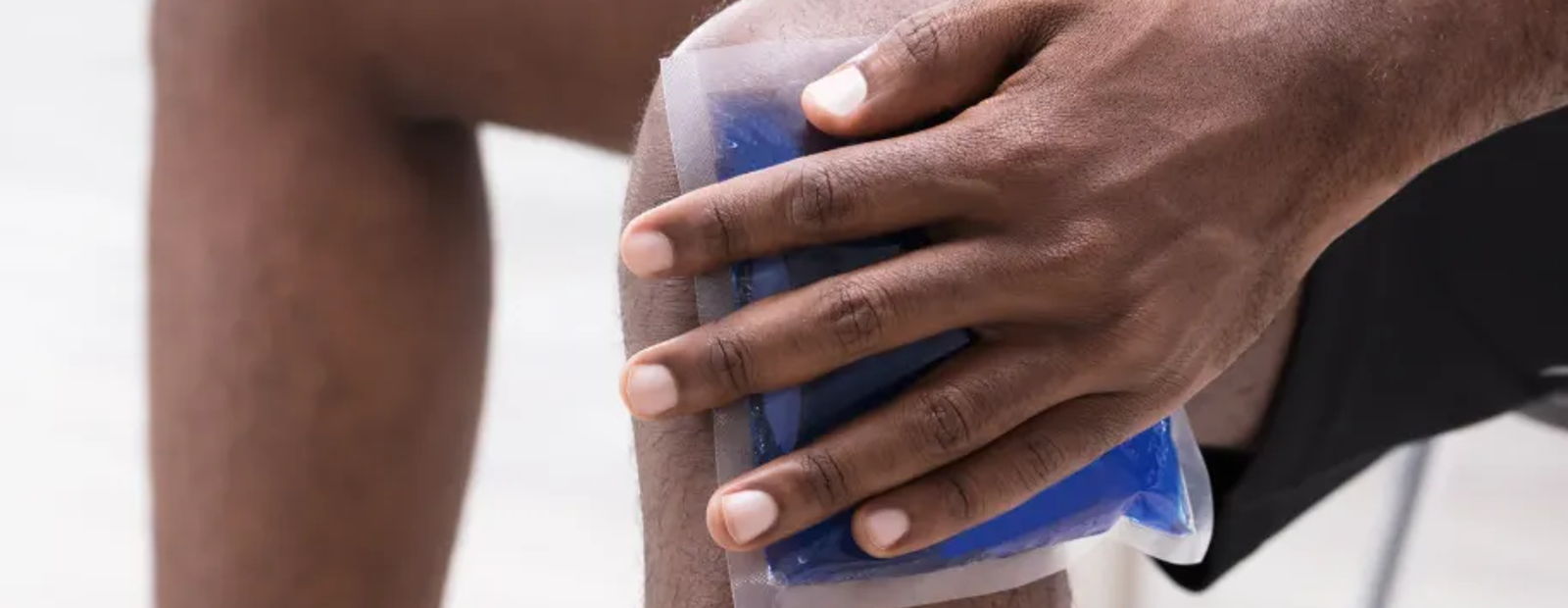
You may decide to place an ice pack on your knee while you’re lying on the couch.


In this case, the ice may numb your knee pain.  


But your knee also benefits from interrupting the forces that are currently harming your knee, like standing.  


Or perhaps your knee is always uncomfortable.  


Your knee pain never goes away completely.  


And it doesn’t feel good to move your knee.


You may decide to use an electric heating pad or a microwavable heat pack. 


Warming your knee results in feeling less stiffness.  


As a result, you're more inclined to move your knee.  


You try gentle exercises like this one.  


Easy movement redistributes fluid inside your knee, providing better lubrication.


What Painful Knees Really Need

Temporary relief from knee pain may occur with a combination of ice or heat or rest, but this won’t increase the strength or resilience of your knees.  


Knee pain will return when activity exceeds your joint’s capacity.   


But if the inside of your knee is sufficiently strong, it will withstand the forces of your activities without resulting in knee symptoms.   


Your knees’ ability to withstand forces is what I call Load Tolerance. 


When loads or forces remain below this threshold, knee symptoms like pain, stiffness, and swelling do not occur.


But when loads exceed this threshold, it causes or worsens knee symptoms.

Your leg muscles may be strong enough, but if your Load Tolerance isn’t high enough, you’ll keep getting knee pain.  


However, if you strengthen your knees from the inside out, your Load Tolerance increases.  


And this means you can enjoy your activities without your knee pain returning.  


And the best part? 


You don’t have to guess – or use trial and error – to efficiently make this happen. 


I provide clients a customized way to increase their inner knee strength – so they can enjoy their active lives without knee pain holding them back.


Key Takeaways

  • Ice and heat affect pain perception, but not long-term outcomes.

  • Relief doesn’t equal repair.
    Ice and heat can calm pain signals, but they don’t increase knee strength or resilience.

  • Comfort strategies still have value. 
    If ice or heat helps you feel or move better, you’ll enjoy short-term benefits. 

  • Knee pain returns when load exceeds capacity. 
    Symptoms show up when your activities demand more than your knee can tolerate.

  • Lasting relief comes from increasing your knees’ Load Tolerance. 
    Strengthening the knee from the inside out raises its ability to handle real-life forces — so knee pain doesn’t keep coming back.


Related Articles

  • What Is Load Tolerance? The Missing Link in Solving Knee Pain

For Inside Out Knee Health,

here's a guide to get started:

You can access it here. 


For personalized guidance to build Better Knees:

Schedule a free 20-minute Strategy Session.  (Find your best time here.)


Disclaimer: The information in this blog post is for educational and informational purposes only and is not intended as medical advice. It should not be used to diagnose, treat, or prevent any health issue or disease without consulting with a qualified healthcare professional. The author of this blog and the website do not bear any responsibility for any actions taken based on the information provided in this blog.

Disclaimer: Disclaimer: The information in this blog post is for educational and informational purposes only and is not intended as medical advice. It should not be used to diagnose, treat, or prevent any health issue or disease without consulting with a qualified healthcare professional. The author of this blog and the website do not bear any responsibility for any actions taken based on the information provided in this blog.

Share

Related Posts

My Shoulder Hurt for Months — Then I Did a Pull-Up. Here's What That Has to Do With Your Knees.

My Shoulder Hurt for Months — Then I Did a Pull-Up. Here's What That Has to Do With Your Knees.

The body often adapts before symptoms improve, which is why people quit their recovery too early. Tracking objective measurements like knee joint Load Tolerance helps bridge the gap between what you feel and what is actually changing. This is the foundation of the Insid
PRP for Knee Pain: An Honest Look at the Evidence

PRP for Knee Pain: An Honest Look at the Evidence

PRP (Platelet-Rich Plasma) injections are among the most debated treatments for knee osteoarthritis. Research suggests PRP can reduce pain and improve function — but platelet dose, preparation protocol, and patient selection significantly affect outcomes. Most important

Why Daily Exercise Won't Necessarily Help You Avoid a Knee Replacement

Why Daily Exercise Won't Necessarily Help You Avoid a Knee Replacement

Daily exercise improves circulation and muscle endurance, but it doesn

About Us
About
Contact
Work with me
Resources
Blog
Videos
Testimonials

Austin, Texas & online worldwide - Phone: 512-394-4722

© 2025 Kertz Coaching, LLC. All Rights Reserved | Privacy Policy | Terms